
Harry Margulies is an author, commentator, and international tax advisor whose work examines religion, economics, morality, and institutional power through the lens of textual interpretation and liberal principles.
Before entering public commentary, Harry built a distinguished career as an international tax advisor. After studying business and economics at Lund University in Sweden, he advised governments and institutions at the highest levels. Notably, he successfully litigated a case before the Swedish High Court that prompted Sweden and the United Kingdom to renegotiate aspects of their bilateral tax treaty. He also contributed to the development of Vanuatu’s tax system under the auspices of the United Nations, and co-authored several legal textbooks, earning a reputation for clarity in navigating complex regulatory and legal frameworks.
In recent years, Harry has applied the same analytical discipline to religion, politics, and public morality. His work is rooted in a belief that institutions — whether religious, political, or cultural — should be judged not by what they say but what they actually do.
A second-generation Holocaust survivor, Harry was born in Austria and spent part of his childhood in an Austrian refugee camp before being allowed entry to Sweden. Educated by Orthodox rabbis throughout his early life, he abandoned religious belief in his teens — an experience that shaped his lifelong commitment to secularism, freedom of expression, and critical inquiry.


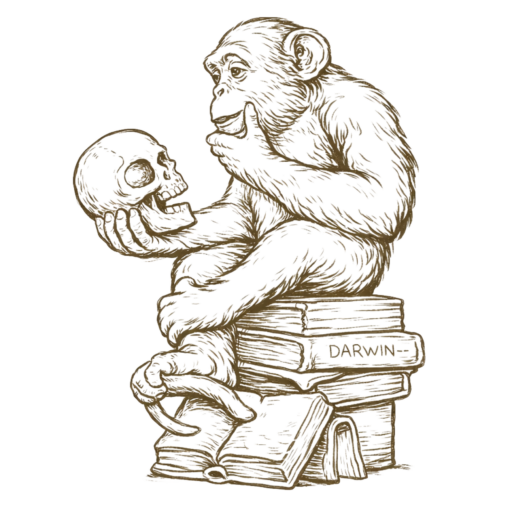
Harry is the author of Why Is It? We Are Afraid of Being Descendants of Monkeys but Not Incest (2021) and Finns Gud? Fan Vet (2024) / Is God Real? Hell Knows (2025), the latter described by ABBA’s Björn Ulvaeus as “funny, sharp, and unafraid.” His writing combines legal reasoning, moral philosophy, and satire, often challenging assumptions that go unexamined in contemporary discourse.
He is a regular contributor to The National and The European, writing on international tax policy, financial law, religion, free speech, and the broader relationship between power, belief, and institutions. His work has also appeared in The Financial Post and The London Economic, and he contributes in Swedish to Fokus and Det Goda Samhället.
Harry has participated in debates, interviews, and public discussions for decades — from Swedish television panels alongside prime ministers and finance ministers in the 1980s to appearances on The Agenda with Steve Paikin, and, more recently, contemporary podcasts and digital platforms. His commentary continues to engage audiences across generations and cultures.
Based in Toronto, Harry continues to write, speak, and engage internationally. His work is characterized by a lawyer’s precision, a skeptic’s discipline, and a refusal to subordinate truth to comfort.
A Small Heresy
I was fourteen years old when I committed what felt, at the time, like a serious transgression.
I had never eaten a non-kosher hot dog. In my Orthodox community, this was not a minor rule but a clear boundary. Still, I was curious. One day, I decided to test God, so I walked up to a hot dog stand and bought a real hot dog. Would God punish me?
I ate it…Nothing happened.
God did not strike me down. There was no thunder, no divine intervention, no immediate consequence at all. That alone was unsettling.
It tasted so good that I ate another. And another. Eventually, I ate more hot dogs than any person should.
Shortly thereafter, I developed a rather impressive stomach ache. For a brief moment, I wondered if this was, after all, God’s punishment. But then something else occurred to me — something that felt new and oddly liberating.
I had simply eaten too many hot dogs.
Having identified the natural cause, divine wrath was out of the question. And once you notice that — once you realize that explanations should match evidence — it becomes very difficult to unsee.
That day did not turn me into an atheist overnight. But it did introduce me to a way of thinking that would eventually make belief impossible. I had discovered that logic, applied honestly, was more reliable than fear.
And that discovery has stayed with me ever since.