
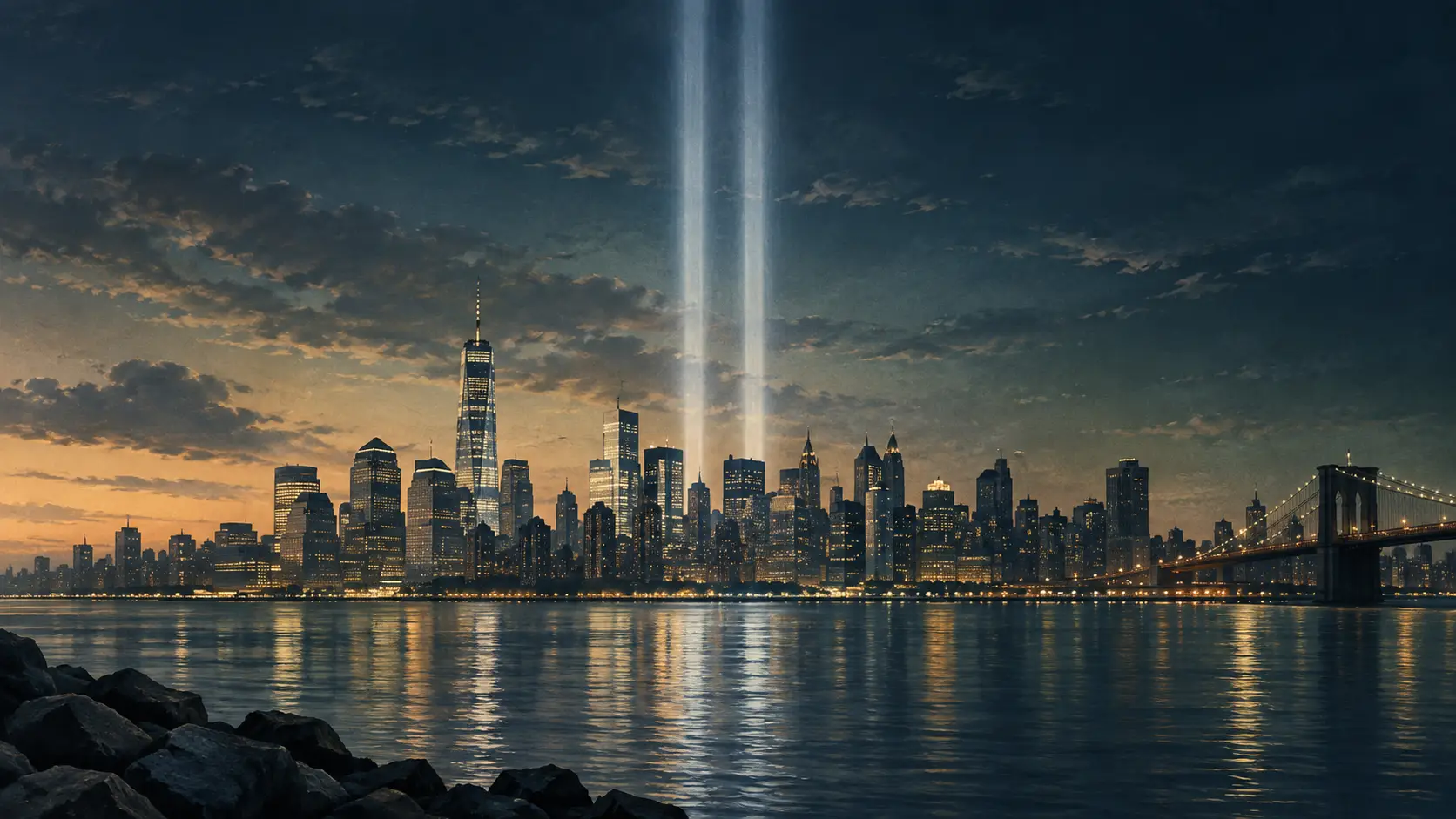
Twenty-five years after September 11, the arguments about what the attacks meant — and what followed from them — are still very much alive. Mehdi Hasan recently revisited that history through a series of statistics. Some of them are important. Some, I think, leave out rather a lot.
So this is an attempt to fill in a few of those gaps. Not to diminish anyone’s suffering, and certainly not to turn tragedy into a competition, but to look at the broader picture. If we are going to revisit the legacy of 9/11, we should be willing to look at the whole story.
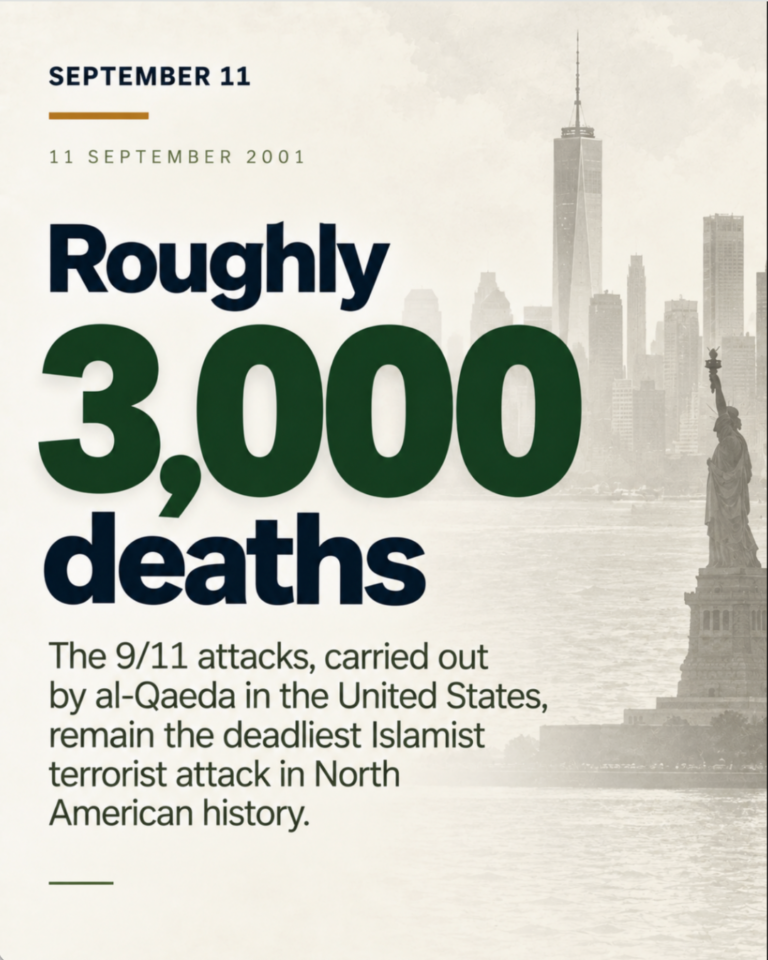
Nearly 3,000 people were killed on September 11, 2001, in attacks carried out by al-Qaeda. Twenty-five years later, the scale of that loss still deserves to be remembered plainly and without qualification.
Mehdi Hasan is right that anti-Muslim violence deserves to be confronted. But if we are going to tell the whole story, then by all means — let’s tell the whole story.
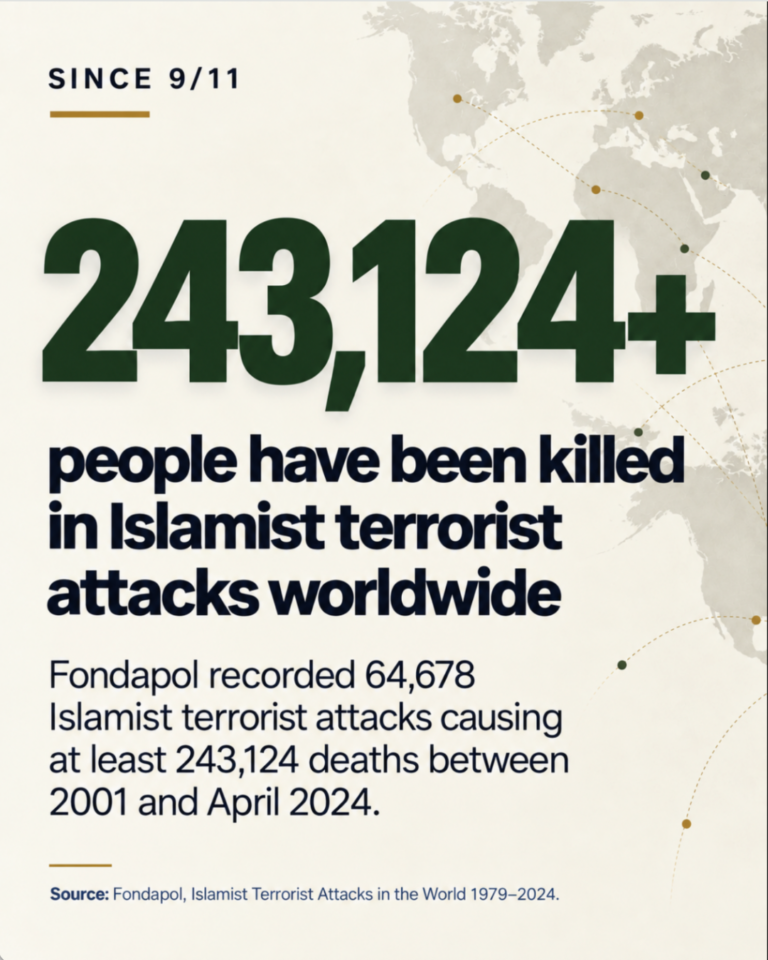
Islamist terrorism has inflicted an enormous human toll of its own. Fondapol records at least 243,124 deaths from Islamist terrorist attacks worldwide between 2001 and April 2024. Those victims deserve to be counted too.
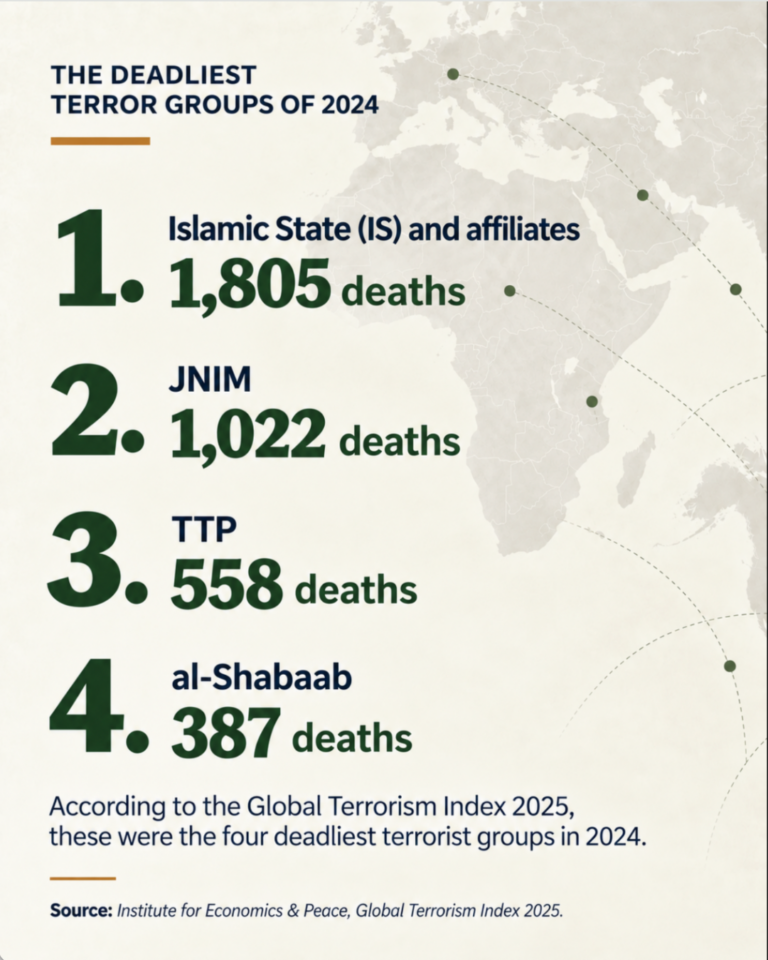
The threat is not abstract. In 2024, Islamic State and its affiliates, JNIM, TTP and al-Shabaab were the four deadliest terrorist organisations in the world. Together, they show how much of today’s terrorist violence is still being driven by a relatively small number of Islamist extremist groups.
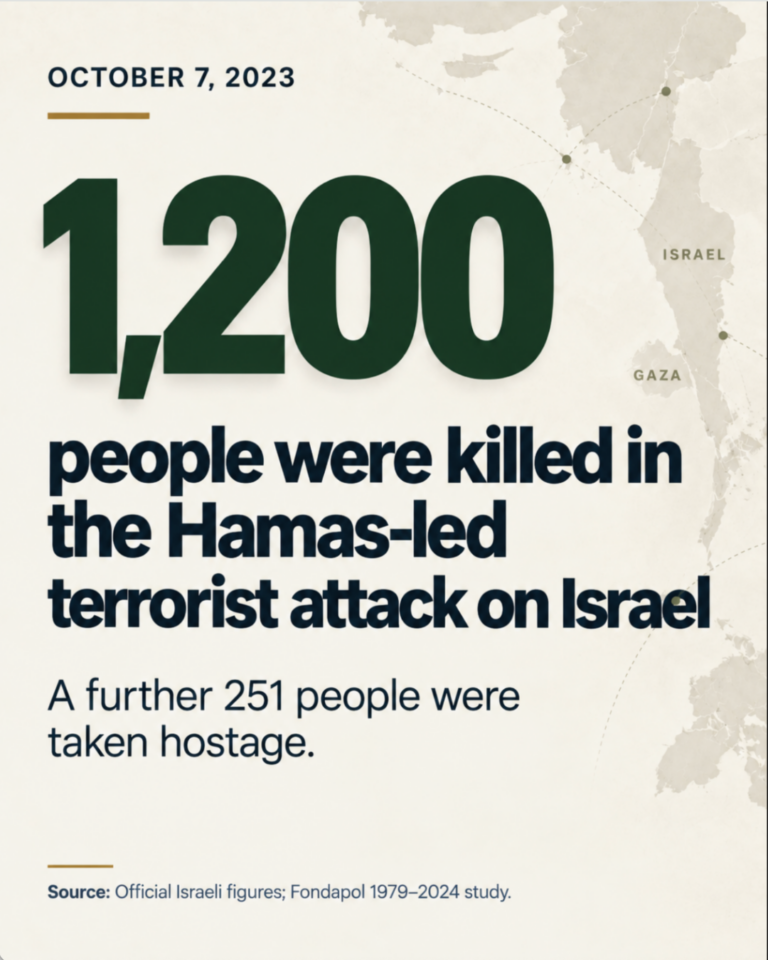
The October 7 attacks were terrorism on an extraordinary scale. More than 1,200 people were killed in the Hamas-led assault, and 251 people were abducted and taken to Gaza as hostages.
Whatever political arguments followed, the people murdered, injured and kidnapped that day should never be reduced to abstractions in somebody else’s narrative.
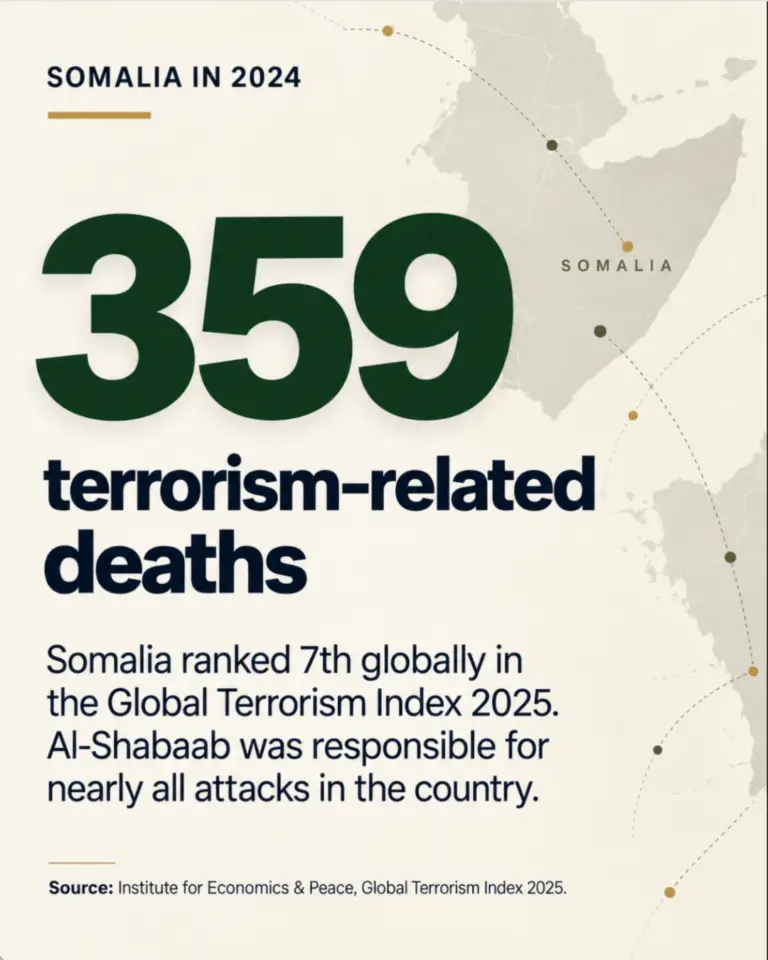
Somalia is a stark reminder of who often pays the highest price for Islamist extremism: the people living alongside it. In 2024, 359 people were killed in terrorist violence in Somalia, with al-Shabaab responsible for virtually all of the country’s terrorist attacks.
The victims of Islamist terrorism are very often Muslims themselves. That reality matters — particularly in any serious discussion about who suffers from extremism.
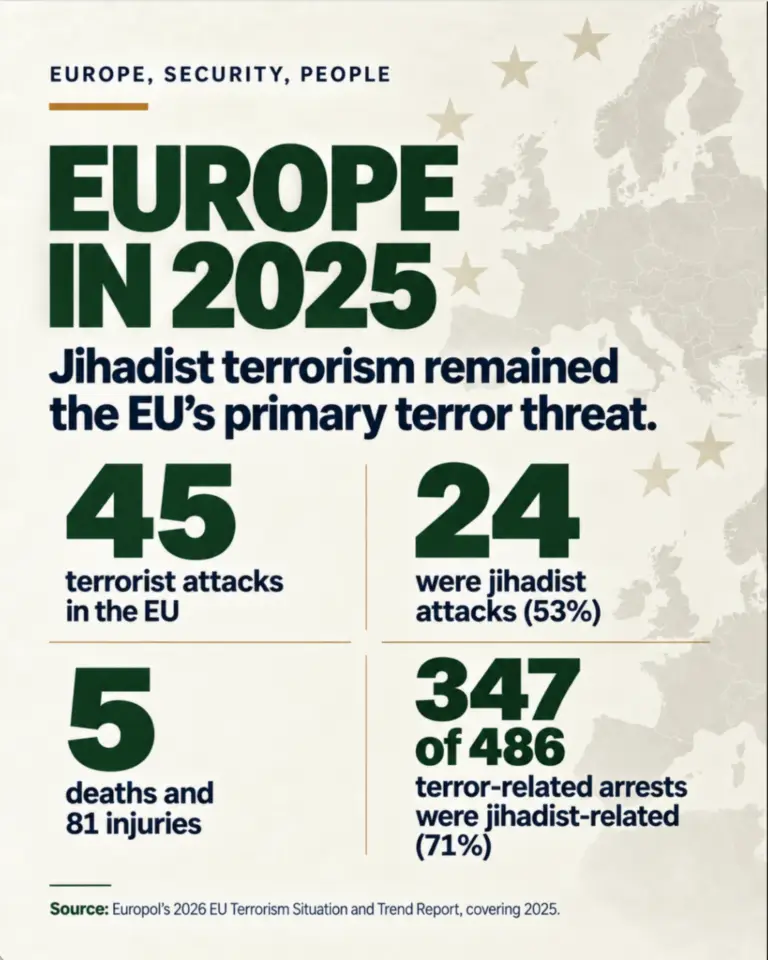
Europol’s recent figures make clear that jihadist terrorism remains a significant part of Europe’s security threat. In 2025, 24 of the EU’s 45 recorded terrorist attacks were jihadist, while 347 of 486 terrorism-related arrests concerned jihadism-related offences.
A liberal society should be able to defend liberal rights and freedoms, including religion, and confront violent religious extremism at the same time. Those principles are not contradictory; they depend on one another.
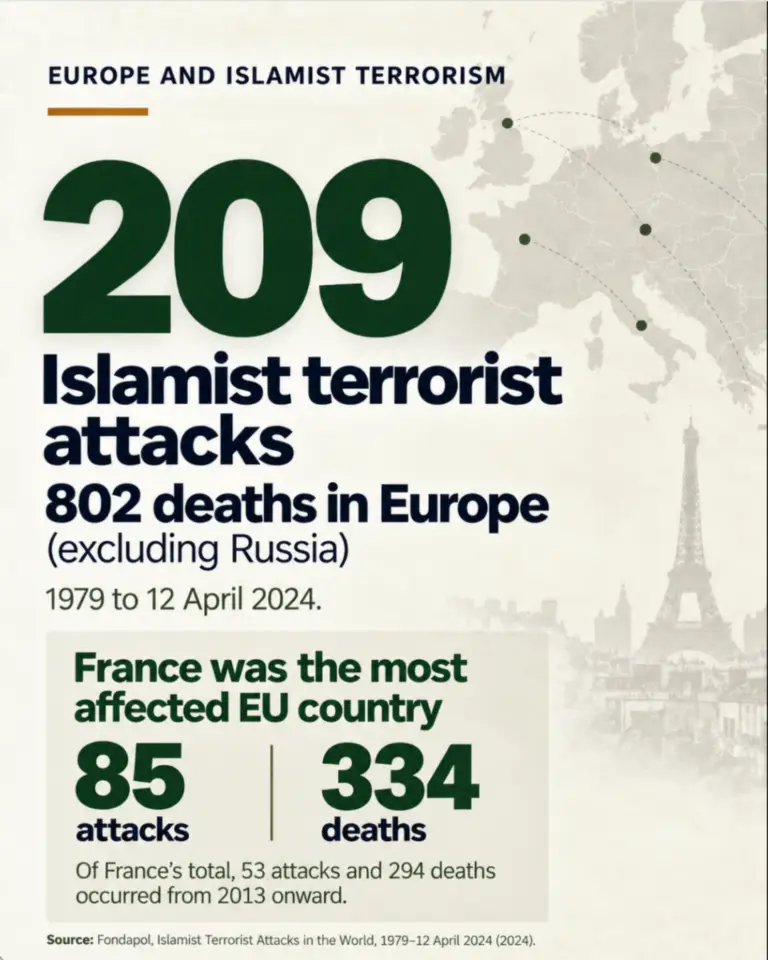
Europe has lived with Islamist terrorism for decades. Between 1979 and April 2024, Fondapol recorded 209 Islamist terrorist attacks in Europe, causing 802 deaths, with France the most affected EU country.
The point is not to exaggerate the threat. It is simply to recognise that a liberal society should be able to name and examine an ideology without pretending that doing so is an attack on an entire faith or its followers.
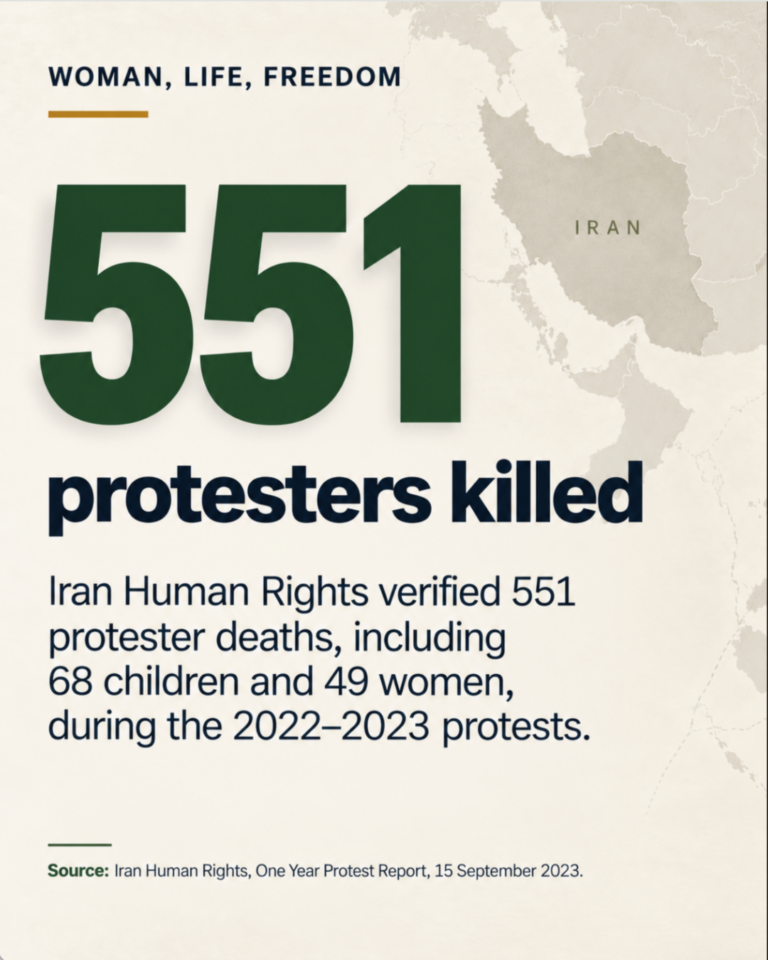
Iran’s response to the Woman, Life, Freedom movement is a harsh example of what can happen when religious authority is enforced through the coercive power of the state.
Iran Human Rights verified the deaths of 551 protesters during the 2022–2023 demonstrations, including 68 children and 49 women. Demands for basic freedom were answered with repression, imprisonment and, for hundreds, death.
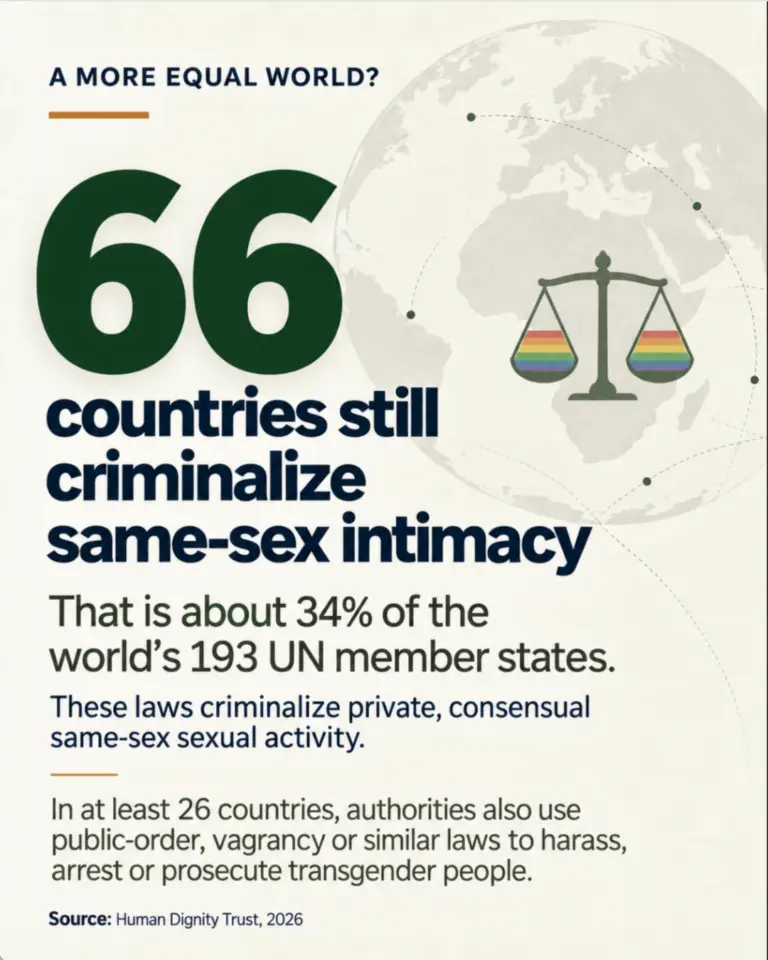
For millions of LGBTQ+ people, equality before the law remains far from universal. Sixty-six countries still criminalise consensual same-sex intimacy, while in at least 26 countries other laws are used to harass, arrest or prosecute transgender people.
It is worth noting that only about 55% of the countries that criminalise same-sex intimacy are Muslim-majority. This is not an argument about one religion. It is an argument about a broader principle: religious or cultural tradition should never place discrimination beyond scrutiny, wherever it occurs.
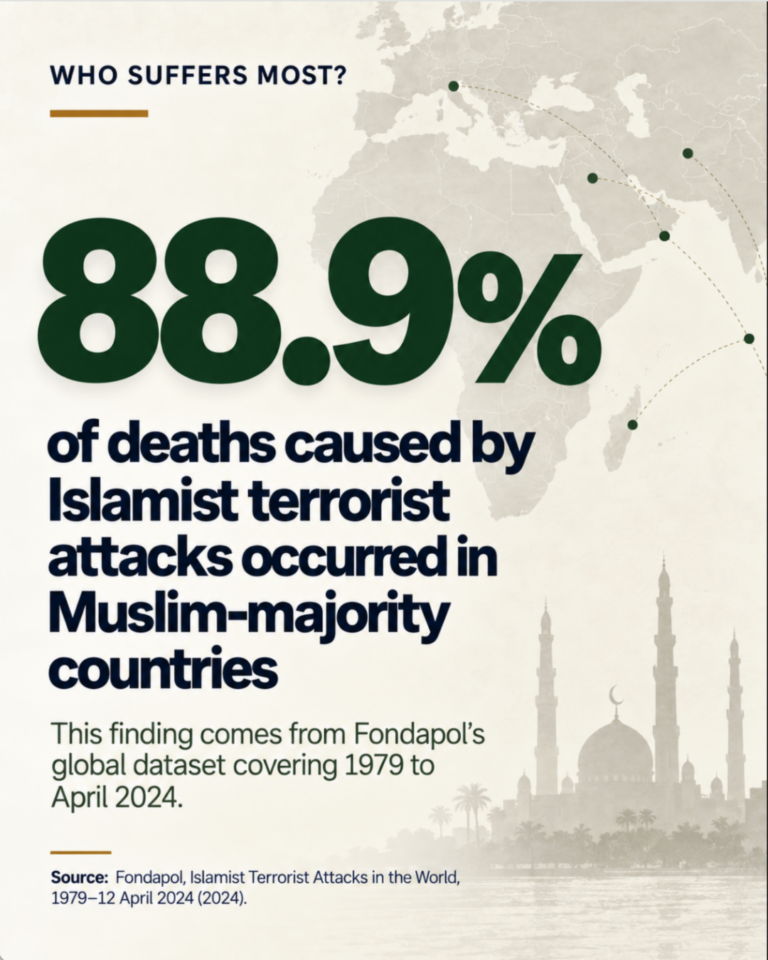
This may be the most important statistic in the entire series. Fondapol’s latest study found that 88.9% of deaths caused by Islamist terrorist attacks occurred in Muslim-majority countries. In other words, the people paying the greatest price for Islamist extremism are overwhelmingly living within Muslim societies themselves.
And that should matter for reasons far more important than winning an argument with Mehdi Hasan. These are innocent lives, and they deserve the same seriousness, sympathy and attention as any other victims of terror.
There is plenty for which America — and the West more broadly — can fairly be criticised. But not every injustice in the world can be laid at America’s door. If we are going to tell the whole story, we should resist editing out the parts that do not fit the preferred moral narrative.
The point is not to defend America. It is to insist on one standard: every human being deserves the same decency, safety and concern, whoever they are and whoever the perpetrator happens to be.
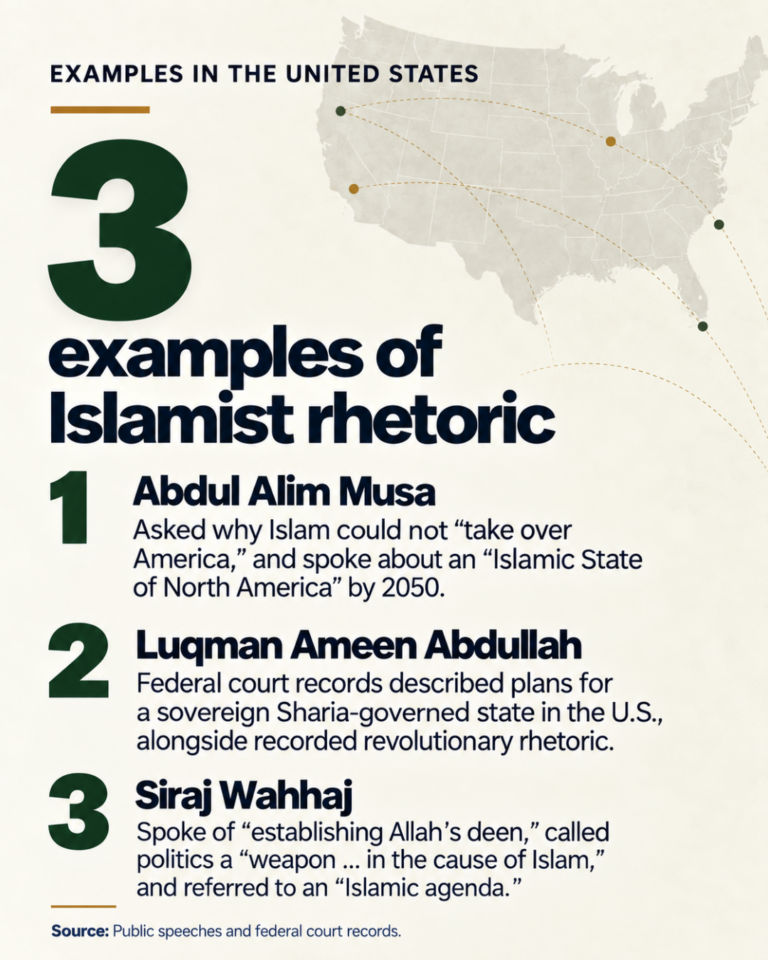
These examples are not presented as representative of American Muslims, nor is provocative rhetoric itself the same thing as criminal conduct. But when religious or political figures speak openly about replacing liberal institutions with a religious order, those ideas are entitled to the same scrutiny we would apply to any other movement seeking political power.
Freedom of religion protects belief. It does not require a liberal society to suspend judgment about what is being advocated in its name.
Remembering 9/11 honestly should begin with the nearly 3,000 people who were murdered that day, the families whose lives were permanently altered, and the enormity of what was done to them. Their suffering should not be diluted, relativised or pushed to the margins of a broader political argument. At the same time, acknowledging that the attacks were carried out by Islamist extremists does not justify casting suspicion on Muslims generally. We can honour the victims, name the ideology behind the attack, and still refuse to confuse that ideology with an entire faith.
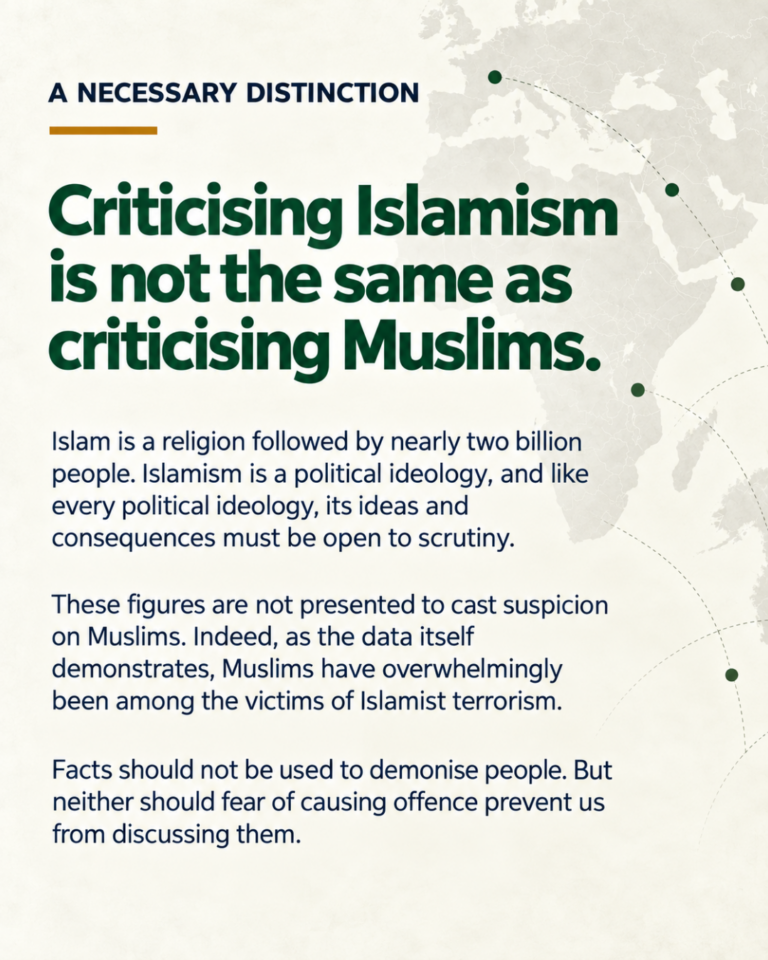
That distinction is essential. Islam is a religion followed by nearly two billion people. Islamism is a political ideology. Like any political ideology, its ideas, ambitions and consequences must remain open to examination and criticism.
And that is ultimately the point of presenting these figures. The story of 9/11 did not end on September 11, 2001, nor is the history of Islamist extremism confined to what happened in the United States. Its victims have included Americans, Europeans, Israelis, women resisting theocratic rule, LGBTQ+ people living under discriminatory laws and, overwhelmingly, Muslims living in societies terrorised by Islamist organisations themselves.
If we are going to revisit 9/11 and its legacy, then we should tell the whole story. Not because one group’s suffering cancels out another’s, and not because tragedy should ever become a competition, but because every victim deserves to be seen.
Facts should not be used to demonise people. But neither should fear of causing offence prevent us from discussing them.
Finally, a happy Jewish New Year to Mr Hasan and to those who follow his work. I mean that sincerely. May the coming year bring many blessings — and, one hopes, considerably less violence, hatred and suffering in the world.
Shana Tova,
Harry Margulies