
A Personal Story
Both my parents were Holocaust survivors. They were deported from Romania to two different concentration camps, survived the war, found each other again, and decided to flee communism. Their escape took them to Austria, where I was born.
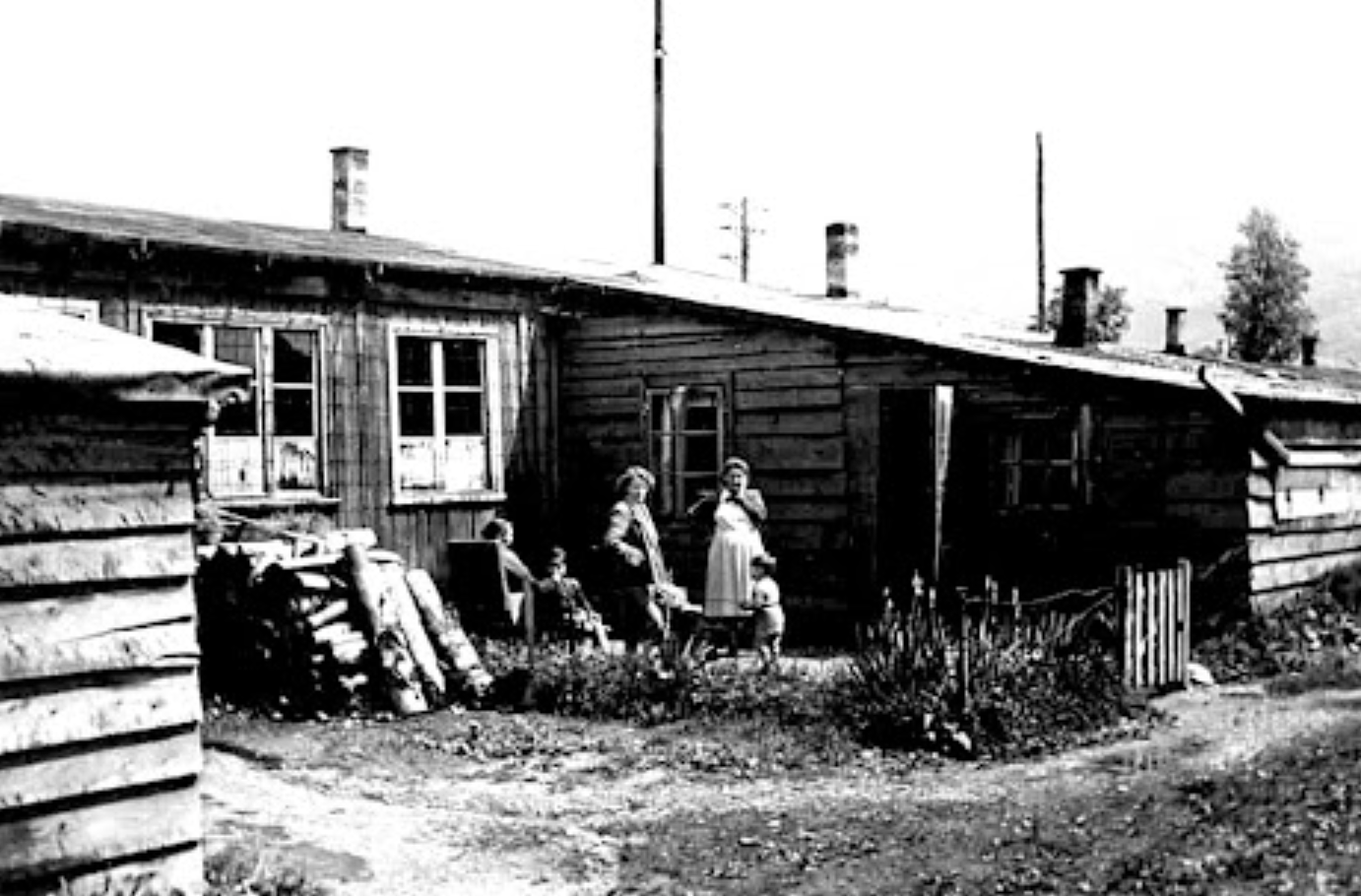
My mother had suffered extreme physical hardship during the war and contracted several serious illnesses, including tuberculosis. Because of her weakened condition, she had a stillborn child before me. We ended up in a refugee camp outside Salzburg, waiting for an opportunity to be resettled. My parents would have preferred to go to the United States, where my mother’s older brother was a medical doctor in New York. U.S. authorities rejected our application because of my mother’s tuberculosis. And so, we waited.
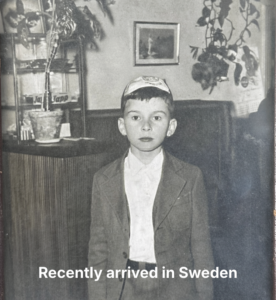
In 1955—ten years after the end of the war—we were finally allowed to resettle in Sweden. I was six and a half years old when we landed at Bulltofta Airport in Malmö.
I still remember my mother’s words as we walked down the aircraft stairs: Harry, be grateful that someone has taken us in. You must do better than the Swedes, who have a natural right to be here, or you will get nowhere.
I found that to be solid advice. It guided me through many difficulties in life.
Refugee Status
A refugee is someone who has been forced to flee their country of origin because of persecution, war, violence, or other serious threats to life and freedom.
While we lived in the refugee camp, neo-Nazis would occasionally amuse themselves by throwing bricks through our windows. We endured this until we were resettled. There was never any doubt in my mind—or in the minds of any of my family members, even when I was very young—that we were refugees. There was also no doubt that we had to go wherever we were permitted to go. In our case, that place was Sweden.
Life and Status in Sweden
In Sweden, we were stateless. We were moved around the country according to where my father
could find work. At times, this meant that we could not live together as a family while we
struggled to establish economic stability.
Eventually, the family reunited in Malmö. My parents managed to rent an apartment with a
living room and two bedrooms. We could not afford the rent, so one bedroom was sublet. My
parents slept in the remaining bedroom, while my sister and I slept in the living room.
There were no border controls between Sweden and Denmark, but I needed a special royal
permit to be allowed back into Sweden after school trips to neighbouring Copenhagen. It took us seven years to become citizens.
In third grade, I had a kind but deeply Christian teacher. I was exempted from Christianity class
and instead attended evening classes in Judaism. Twice a week, I had an hour off during the
school day. On one occasion, when I returned to the schoolyard, my classmates would run up to
me, chanting, “You killed Jesus.” At the time, I had no idea who that was.
The school year ended with a celebration in a church, including the singing of psalms. There was
no exemption for me.
Malmö was home to one of the larger neo-Nazi movements in postwar Sweden. Jews were
subjected to constant harassment, and swastikas were periodically painted outside our building’s
entrance.
Later, at Lund University, I encountered an openly neo-Nazi lecturer. We stared at each other
during lectures, but he graded me fairly. There was nowhere to complain—and no expectation
that complaining would help.
Two UN Refugee Organisations
The United Nations High Commissioner for Refugees (UNHCR) was established to implement the 1951 Refugee Convention. It assists people who have been forced to leave their country and are unable or unwilling to return because of a well-founded fear of persecution. Its mandate is to provide protection and to work toward durable solutions: voluntary return, local integration, or
resettlement in a third country.
UNHCR looks after more than 30 million refugees worldwide and also assists other “people of
concern,” including stateless persons and the forcibly displaced. It does so with a staff of roughly 20,000 people working around the world. The guiding principle is that refugee status should be temporary and end as soon as a durable solution becomes possible—resettlement being one such
solution when others fail.
The United Nations Relief and Works Agency for Palestine Refugees in the Near East
(UNRWA) operates under a unique and highly specific mandate. It works exclusively with Palestinian refugees, defined as persons whose normal place of residence was Palestine between 1 June 1946 and 15 May 1948. Under UNRWA’s rules, refugee status can be inherited by
descendants through the male line or acquired through legal adoption.
Unlike the UNHCR model, this definition was never intended to be temporary. UNRWA
currently serves around six million Palestinian refugees, primarily in Jordan, Lebanon, Syria,
Gaza, the West Bank, and East Jerusalem. It employs approximately 30,000 staff, many of whom
are themselves Palestinian refugees.
UNRWA provides schooling and social services. But after several generations of refugees—and with numbers continually increasing—it is perhaps inevitable that many employees strongly identify with those they serve. There is no resettlement mandate, no expectation that refugee status should end, and credible concerns have been raised about educational materials that promote hostility toward Israel and Jews. It is therefore difficult not to see UNRWA as an organization whose continued existence depends on maintaining this exceptional definition of Palestinian refugeehood, even while acknowledging that it also provides needed humanitarian services.
Immigration to the West
As a former refugee, I understand the need for people fleeing danger to find safety. But my
education and life experience have taught me that respect for the host country and its culture is
essential.
I have repeatedly expressed concern that the actions of militant Islamists risk awakening a silent majority that will respond by voting for anti-immigration political movements. In that sense,
militants become the enemies of the vast majority of peaceful Muslims. Some Muslim preachers openly claim that host societies must eventually be subjected to Islam and Sharia law. Such rhetoric fuels tension and ultimately harms those peaceful Muslims who genuinely need protection and refuge.
Returning to My Experience
I was not educated to fully integrate; I was educated to tolerate, in the hope that my host country would tolerate me in return.
I cannot imagine what kind of education Palestinian refugees receive from UNRWA. In my case, that would have meant remaining in a refugee camp in Austria, generation after generation, being taught to hate Germans instead of being encouraged to find productive ways to resettle, rebuild
and move on.
I also cannot imagine expecting the various countries that sheltered me, to be forced to adapt to me, rather than expecting myself to respect the people who, with considerable generosity, allowed me to stay.
Conclusion
In discussing UNRWA, I have no intention of denying Palestinian grievances. What I am
arguing is that all refugee policies should aim to lead to dignity, integration, and peace. That may
include resettlement, which, after some time, no longer feels like permanent displacement.